The Armazém da Família Program, known for its commitment to providing healthy and quality food to residents of Curitiba (Brazil), plans to expand its operations to serve the general public while maintaining its commitment to social responsibility.
O ARMAZÉM DA FAMÍLIA
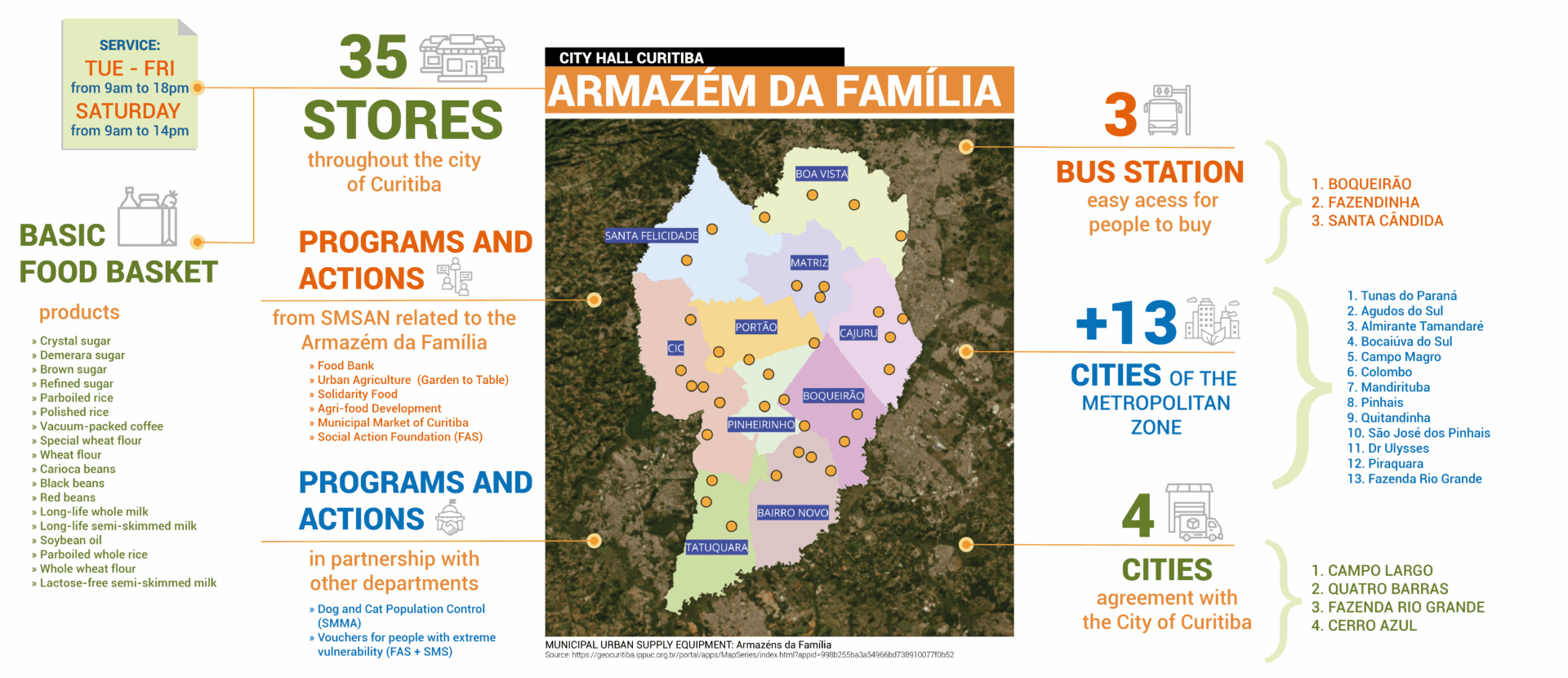
The Armazém da Família is a social program by the City of Curitiba (Brazil), coordinated by the Municipal Secretariat for Food and Nutritional Security. For over three decades, it has promoted access to quality food at affordable prices for families in vulnerable situations. With 33 years of service, it is nationally and internationally recognized as a reference in public policies for food security and social supply.
The program’s purpose is to ensure that low-income populations have access to essential products—basic food items, hygiene, cleaning products, and household necessities—at prices, on average, 30% lower than those in conventional retail stores. The brands sold are market leaders, ensuring the quality of the products offered.
In addition to basic food items, the program also addresses specific dietary needs, offering gluten-free, light, diet, lactose-free products, as well as appropriate food for infants up to 12 months old. This variety promotes food inclusion and supports balanced nutrition for different population groups.
The Armazém da Família also boosts the local economy by prioritizing the purchase of food from family farmers, promoting income and development for small producers, encouraging sustainable practices, and strengthening the connection between rural and urban areas.
The program has 35 physical units strategically distributed across Curitiba’s 10 administrative regions, serving families with an income of up to five minimum wages. Approximately 340,000 families are registered—more than half live on up to one minimum wage, and 31% live on up to two minimum wages.
Beyond directly serving this population, the Armazém da Família positively influences the city’s economic dynamics by helping to regulate prices in the traditional retail market, benefiting all Curitiba residents.
With expansion plans to also serve the general public, the program reinforces its commitment to social responsibility and equity in access to healthy and quality food.
NEW CONCEPT
The new proposal for the Armazém da Família maintains its commitment to supporting people in social vulnerability—including those living in poverty, temporary hardship, low-income, or with dietary restrictions—while expanding its scope to promote inclusion and well-being for a broader audience.
The initiative aims to further democratize access to healthy food and hygiene and cleaning products at affordable prices, promoting inclusion and well-being for the entire community.
To redesign this new model, the Municipal Secretariat for Food and Nutritional Security collaborated with Centro Brasil Design (CBD), using the Design na Prática (Design in Practice) methodology—an approach developed by CBD with a collaborative, interdisciplinary, and user-centered focus. This methodology involves teams composed of people with diverse skills and allows for broad problem exploration, focusing on the needs of the population served to develop effective solutions.
The project actively involved all stakeholders connected to the Armazém da Família: employees and collaborators working directly in the program, users, representatives from other secretariats, product suppliers, social organizations, the Municipal Secretariat for Food and Nutritional Security, and the wider community. This collective effort was essential to identify improvement opportunities, strengthen services, and develop sustainable and socially responsible expansion strategies.
As a result, the “Chain of Good” concept was created. It proposes opening the Armazém da Família to the general public, especially those who value saving but also want to support a high-impact social program. By shopping at the Armazém da Família, these individuals become part of a solidarity network that helps sustain the discounts offered to the most vulnerable populations.
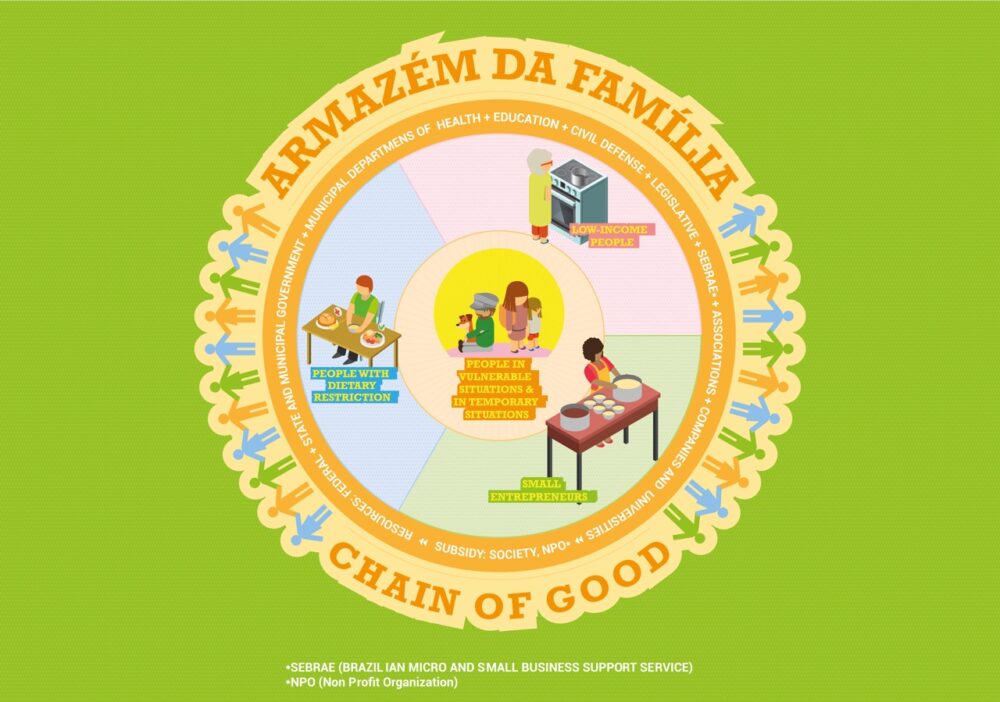
The new model is based on the Service Layers concept, prioritizing assistance to families in poverty with greater subsidies on the basic food basket while also benefiting people in temporary hardship, low-income individuals, people with dietary restrictions, and small food sector entrepreneurs. At the same time, it expands to other segments of society, increasing the program’s reach and sustainability.
SERVICE LAYERS
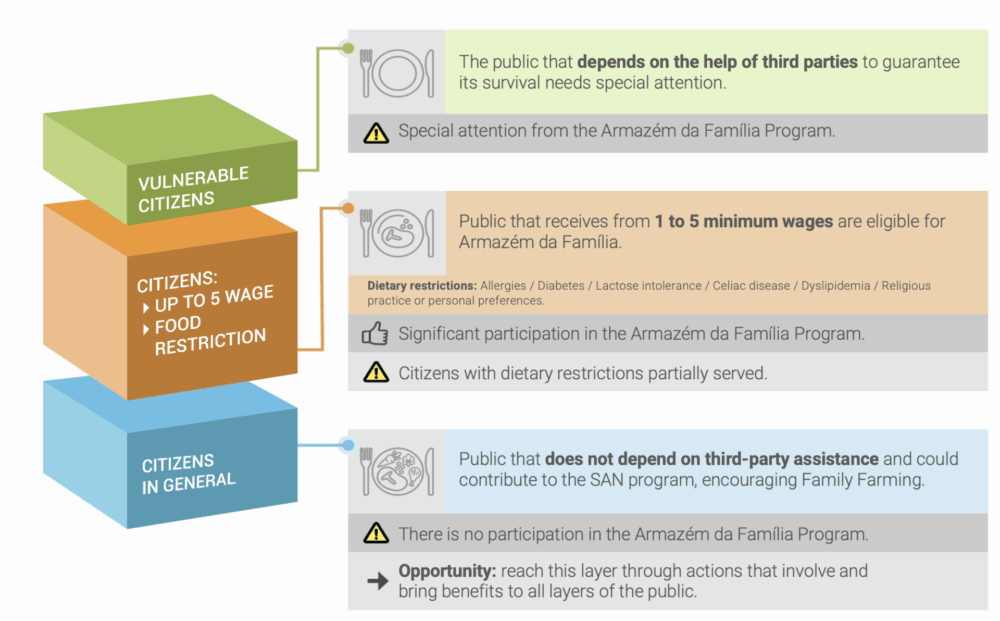
Layer 1: to serve the population living in poverty (social vulnerability) who require special attention, Armazém da Família will offer basic food basket products with up to 30% discount and 15% on other items. People in emergency situations (temporary) will also be able to access this benefit for a limited time.
Layer 2: to serve low-income people and people with special diets, the public that already uses Armazém da Família; the proposal is to offer basic food basket products with up to a 15% discount and 5% on other products. This group has a second target audience, people undergoing health treatment and with dietary restrictions. In addition to the discount on basic food basket items and discounts on products that fit their diet, an action between the Secretariats could make available health and food services. Small entrepreneurs are also part of this group and will be able to access discounts.
Layer 3: to serve society in general that seeks savings, Family Farming products and is willing to collaborate with the Armazém da Família Social Program, that is, it will be the public that will help with the chain of good by increasing Armazém da Família sales and receiving a 5% discount on basic food basket items.
ECOSYSTEM
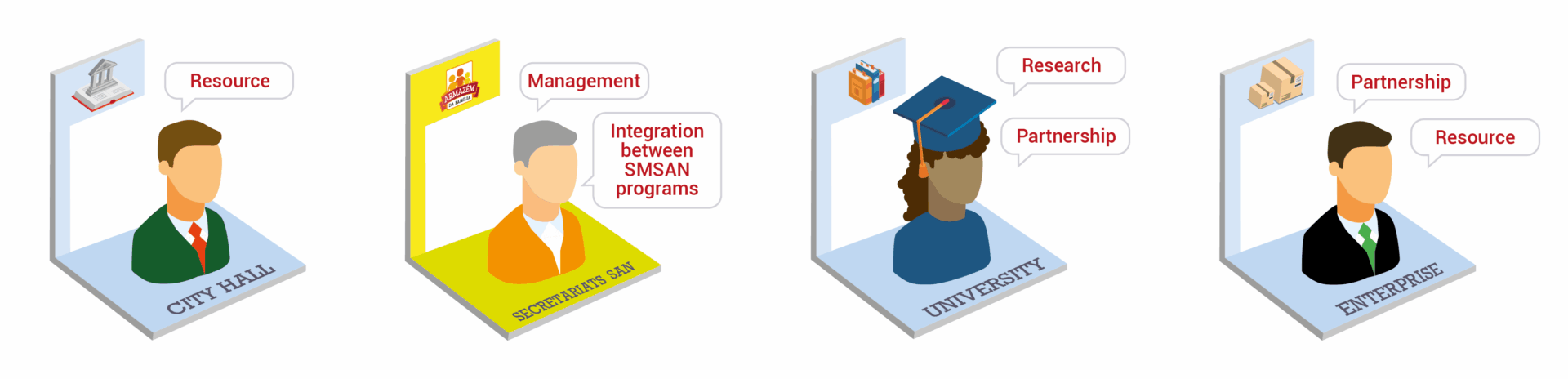
To strengthen and expand its impact, the new Family Store model proposes the construction of a collaborative ecosystem that unites efforts from the public sector, private sector, and civil society. The idea is to establish partnerships with companies and industries committed to ESG practices, as well as institutions like SEBRAE, universities, civil society organizations (CSOs), and the Legislative branch. Together, these actors can strategically contribute to addressing food and nutritional insecurity in Curitiba.
The Family Store is now envisioned as an ecosystem that connects the community, municipal department actions, and social and cultural projects promoted by civil society. It becomes a space of integration and collaboration, enhancing transformative initiatives in its surroundings.
In addition to providing access to essential products, the program will also have an educational role. Through a visual communication proposal, Family Store units will serve as spaces for guidance on healthy eating and quality of life.
“It is inspiring to see how the public sector, civil society organizations, and communities can work together to create a more sustainable and inclusive future for all,” highlighted Luiz Dâmaso Gusi, former Municipal for Food and Nutritional Security of Curitiba.